Zapping

Year
2025
Location
Santiago, Chile
Industry
Entertainment, Media & Broadcasting, Streaming
Services
Web Design, Content Strategy, Site Architecture, UX/UI Design, Iterative Prototyping, Web Development, Conversion Rate Optimization
zapping.com — Taking the future of TV to the next level
View website
Background

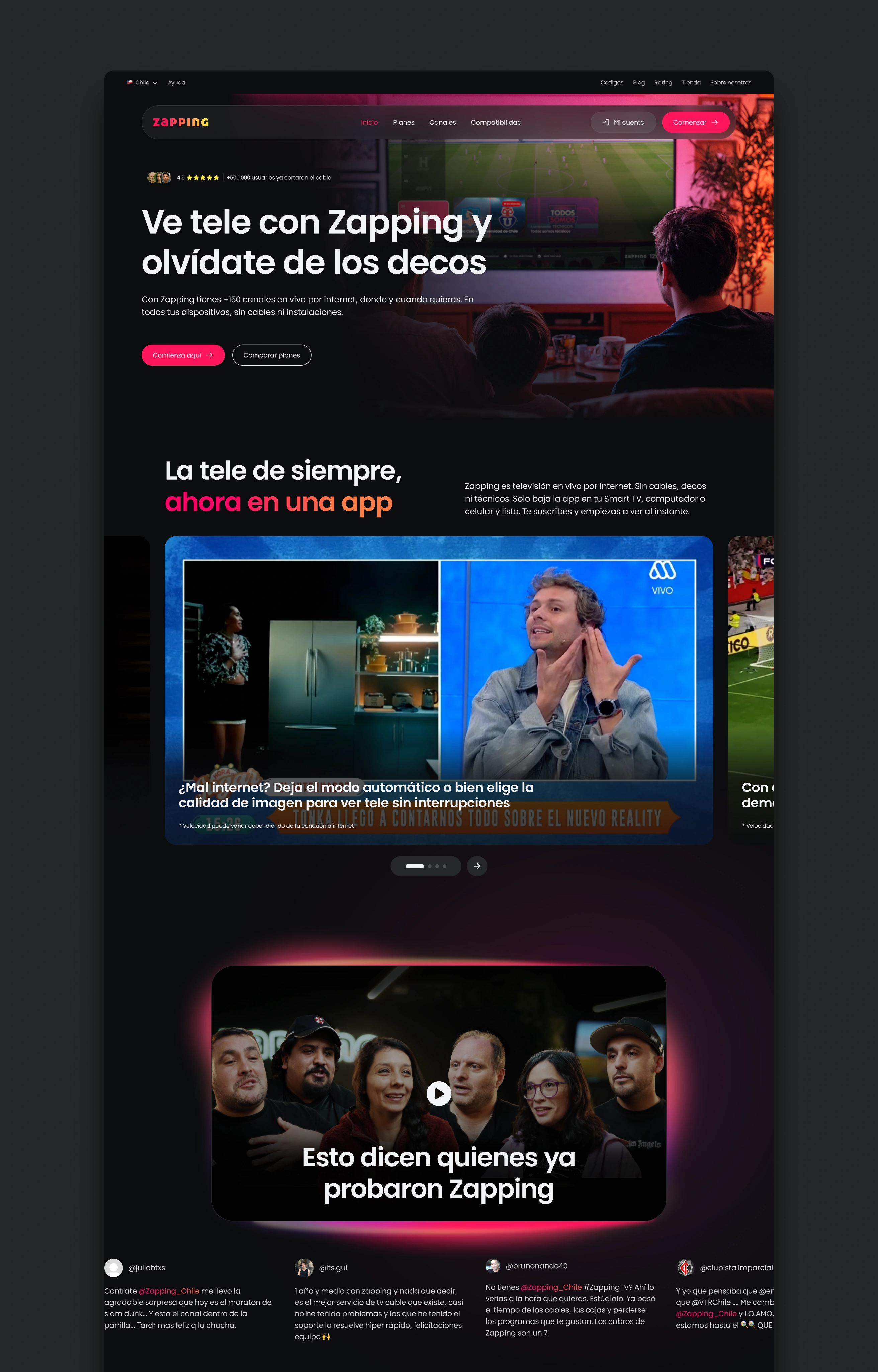
The project at Zapping was developed as part of a strategic shift in the role of the website, evolving from a primarily informational portal into the main entry point to the product. The objective was to turn the site into a transactional and retention-driven engine, capable of supporting the company’s growth and scaling alongside the product.

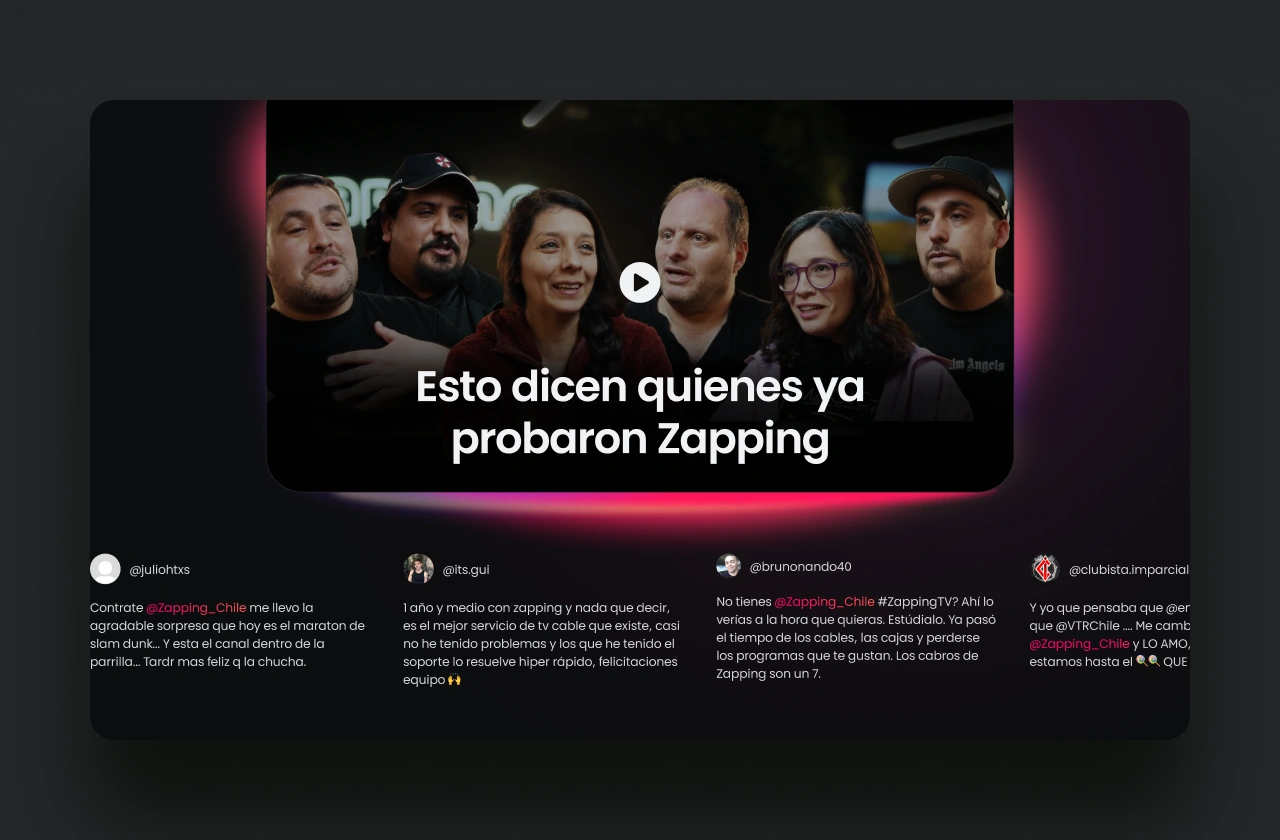
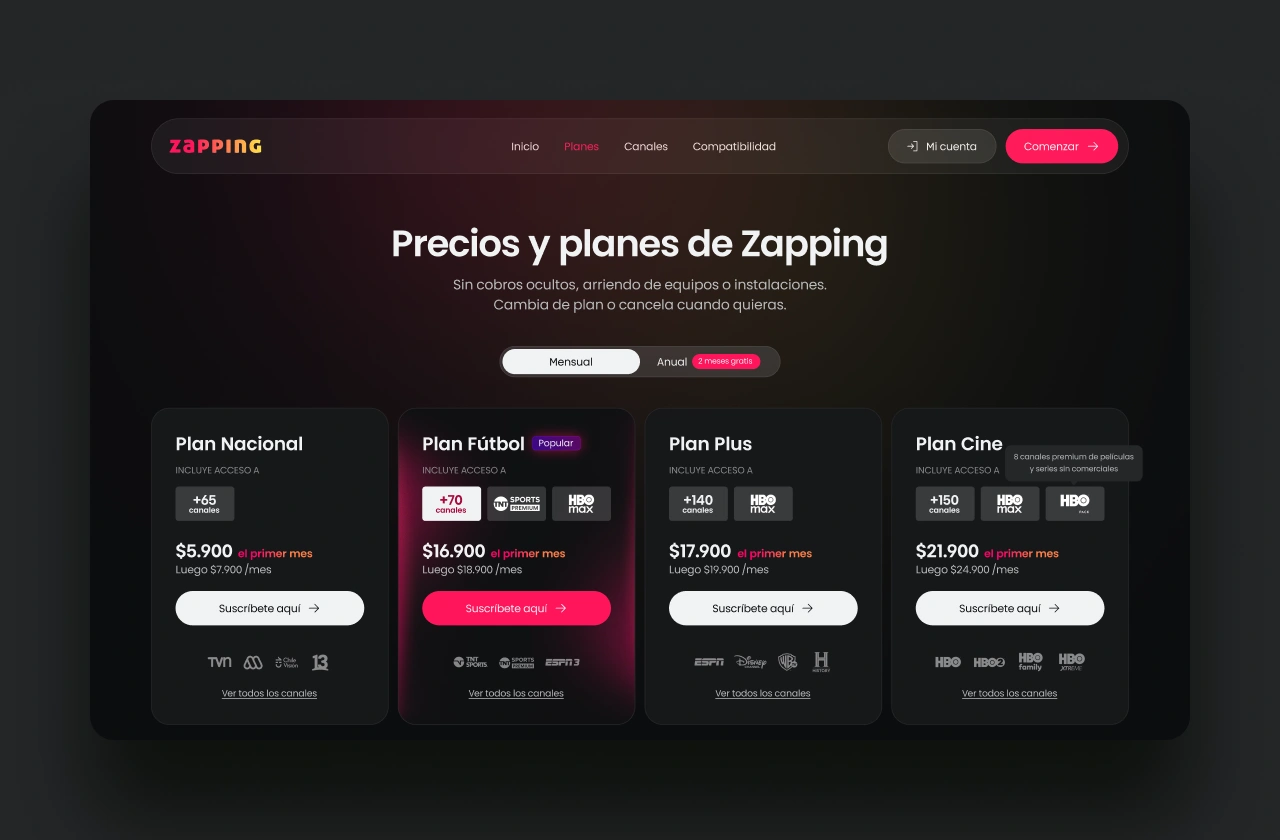
The work focused on significantly improving technical performance, redefining the user experience, and restructuring the site’s architecture to prioritise key actions such as login, registration, and subscription. This involved a deep technical rebuild, a new visual hierarchy, and the introduction of a content strategy aligned with high-intent traffic and trust-building.

The result was a faster, more stable, and outcome-oriented website that moved beyond being a simple showcase, becoming a central channel within Zapping’s digital ecosystem, with direct impact on acquisition, conversion, and recurring product usage.

Key results
1
A substantial improvement in website performance, bringing Core Web Vitals to excellent standards. Visual load time was reduced by over 80%, layout stability reached near-perfect levels, and the Lighthouse score increased from critical to outstanding, establishing a solid technical foundation for scale.
2
Transformation of the website into a measurable and growth-oriented channel. Annual sessions grew by more than 90%, with significant improvements in visit quality, a sharp increase in direct and referral traffic, and the implementation of advanced tracking that enabled the measurement of over 300,000 key events.
3
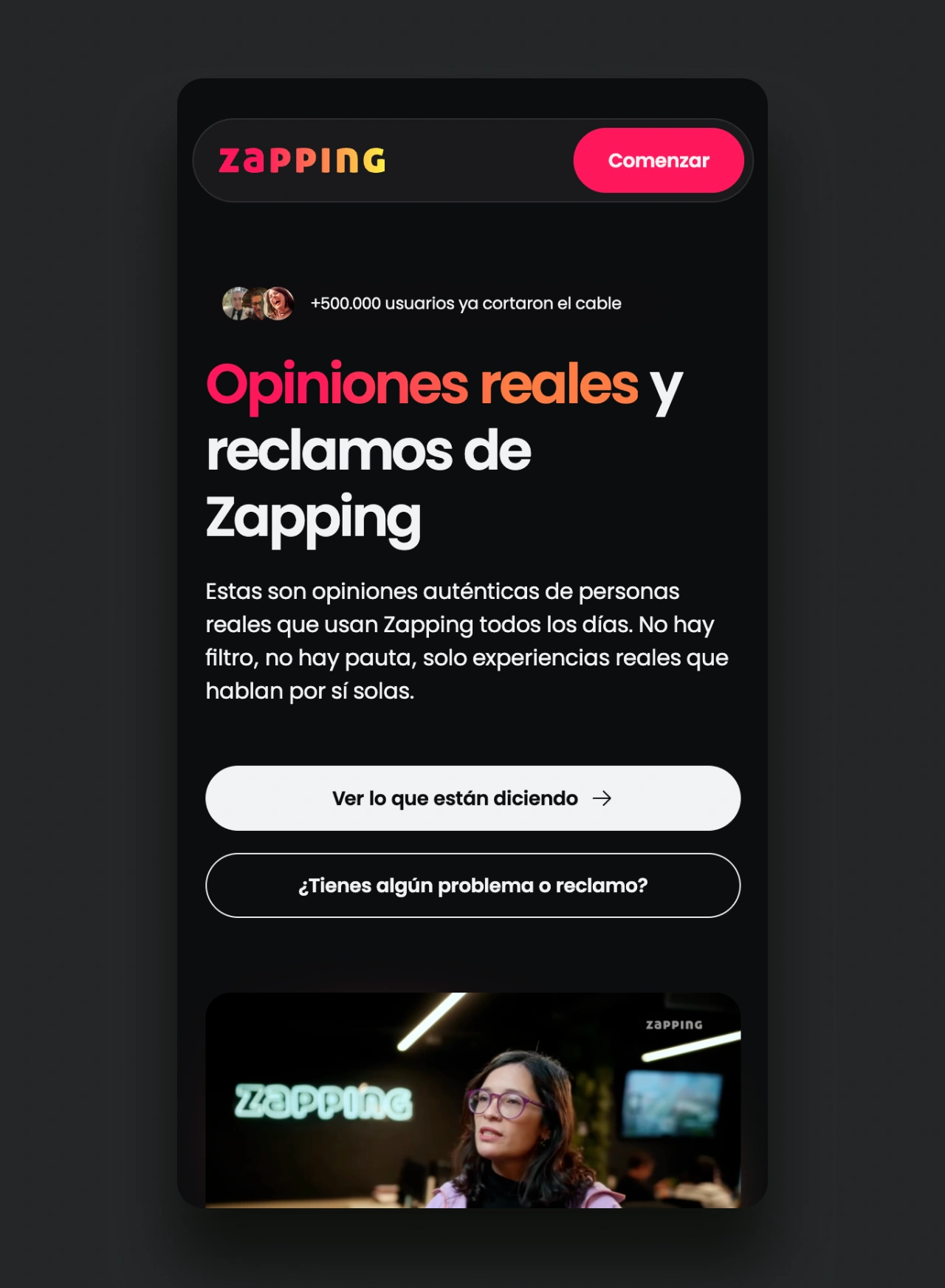
A redefined user experience with a strong transactional and mobile-first focus. The introduction of an omnipresent funnel, new visual hierarchies, and high-intent pages positioned login and registration as the most visited flows, reinforcing the website’s role as the primary gateway to the product.